
GFree Cakes / UK edition
Which binoculars will you actually take outside?
Comfort and familiar places are a useful starting point for birdwatching.
A useful answer starts with your own situation. Use the questions below to work out what deserves a closer look.
Where will you use the binoculars?
A pair of binoculars is easiest to choose when you know where you will use it. A garden, woodland path and open wetland create different viewing distances. Think about how far you will carry the binoculars and whether you normally wear glasses. A comfortable pair that comes with you is more useful than an impressive specification left at home.
What do the two numbers mean?
The first number in a specification such as 8×42 describes magnification; the second describes objective-lens diameter in millimetres. More magnification also makes movement harder to manage. Larger lenses generally add size and weight. Use the figures to shortlist options, then test the view and the controls rather than treating the biggest numbers as an automatic upgrade.
How can the RSPB’s guidance help?
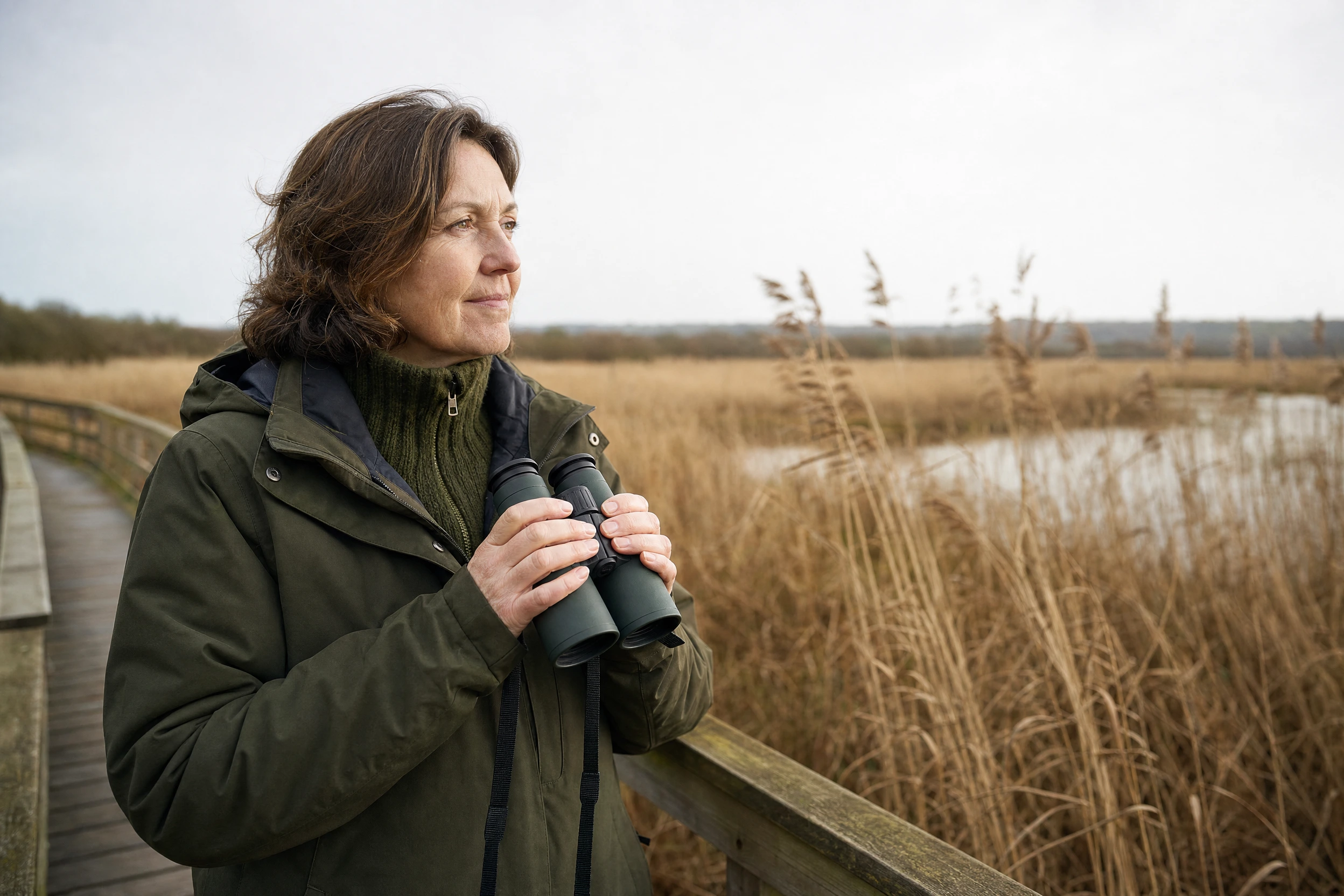
RSPB Shop’s buying guides discuss magnification, comfort, eye relief and weather protection, and encourage trying binoculars in person. Its shop carries birdwatching optics at different levels. Features vary by model, so read the individual specification and current purchase terms. The photograph here is an original generated illustration of birdwatching, not an endorsement by a named observer.
Do the controls feel comfortable?
Lift the binoculars several times and check whether the focus wheel is easy to reach. If you wear glasses, test whether you can see the full image with the eyecups adjusted appropriately. Look at something nearby as well as a distant subject. Compare two or three options in similar conditions, giving comfort as much attention as fine detail.
What else belongs in the decision?
Check what is included, how the binoculars will be carried and the stated protection against weather. Read the warranty and returns information for the exact model. Follow reserve guidance and observe birds without disturbing them. Buying optics is a practical choice about how you watch; it does not require purchasing the most expensive pair before your first walk.
Questions before you decide
What does 8×42 mean?
The first figure is magnification. The second is the objective-lens diameter in millimetres. Consider these alongside weight, handling and the places where you watch birds.
What should glasses wearers try?
Check eye relief and adjust the eyecups so you can see the full image comfortably. Trying a pair in person is more useful than relying on a specification alone.
Is higher magnification always better?
No. It can make movement harder to manage and may not suit the viewing distance or steadiness you need. Compare a few options under similar conditions.
About this commercial article
Advertisement · This commercial article contains promotional outbound links. We may receive a commission where an affiliate arrangement applies. Payment does not establish that an offer is suitable for you. The provider is responsible for its product, service and order terms.
Provider information consulted on 6 September 2026. Details can change.